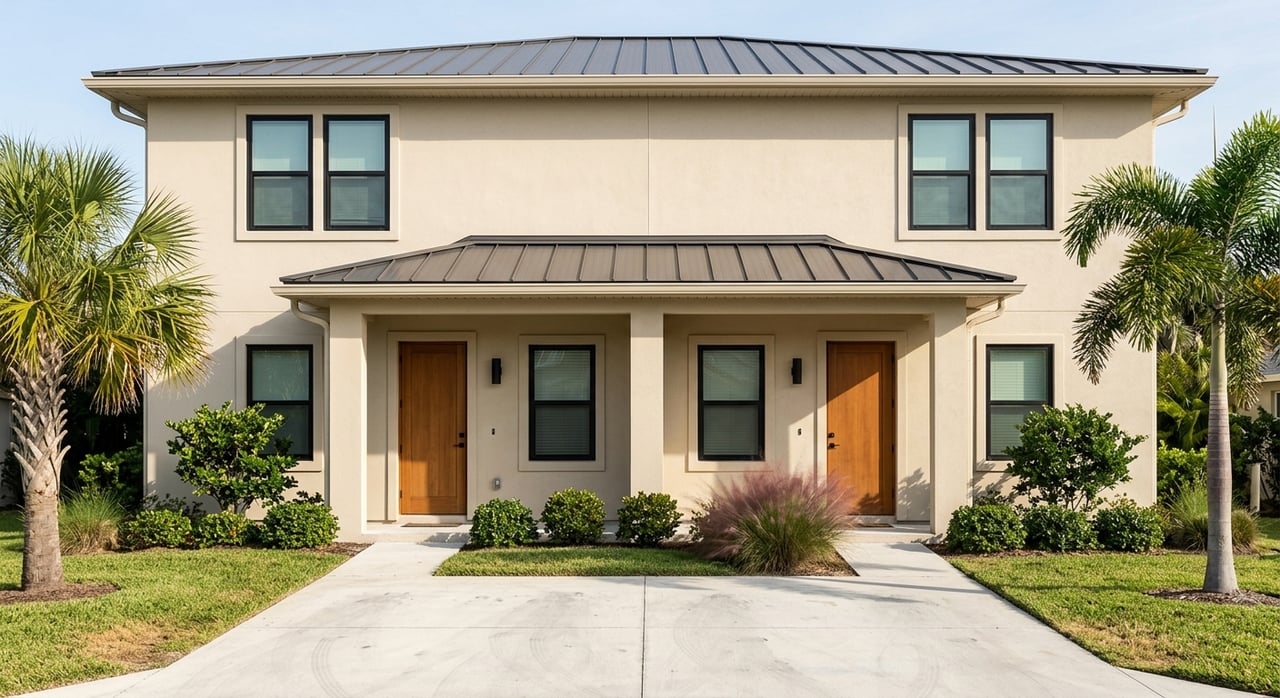
If you have been watching Tampa Bay for your next duplex, triplex, or fourplex, this may be one of the more practical moments to buy. The market is no longer running at the breakneck pace of the post-pandemic surge, and that matters if you want to make a decision based on numbers instead of hype. In this guide, you will see where small multi-family opportunities around Tampa Bay may make sense, what the current data says about rents and occupancy, and how to underwrite deals more carefully in Pinellas and nearby markets. Let’s dive in.
Why small multi-family still stands out
Small multi-family properties can give you flexibility that a single-family rental often cannot. You may be able to live in one unit and rent the others, add income from multiple leases, or spread vacancy risk across more than one unit.
That said, this is not a market where you should count on fast appreciation to bail out a weak deal. According to recent Tampa Bay multifamily market data, population growth remains positive, but occupancy and rents have softened from prior peaks.
What the Tampa Bay numbers say now
The Tampa-St. Petersburg-Clearwater metro reached 3.5 million people in Q2 2025, up 1.2% year over year. Even with that growth, stabilized occupancy in the 100+ unit apartment dataset fell to 91.0% in Q4 2025, while effective rent declined to $1,828 per unit.
In Pinellas County, stabilized occupancy ended Q4 2025 at 90.3% with effective rent at $1,869 per unit. These figures are useful for market direction, but they are not direct comps for duplexes or fourplexes, so you still need unit-level rent and expense analysis on every property.
Another important shift is leverage in negotiations. Current sales conditions in Tampa and Pinellas show balanced market conditions, with sale-to-list ratios around 97% in Tampa and 96% in Pinellas County, which gives buyers more room to negotiate than they had a few years ago.
Small multi-family pricing around Tampa Bay
For investors focused on smaller properties, asking prices vary across the area.
- Tampa had 57 active multi-family listings at a median asking price of $494,000.
- St. Petersburg had 55 active multi-family listings at a median asking price of $538,000.
- Pinellas County had 165 active multi-family listings at a median asking price of $563,000.
- In Pinellas County, multi-family listings were staying on the market about 70 days on average.
These price points matter because they set the baseline for your screening. They also show why many buyers are targeting smaller buildings instead of larger apartment assets, especially if they want an entry point that still leaves room for repairs, reserves, and financing costs.
Rent trends and income potential
Rent data in Tampa Bay is not perfectly uniform across sources, so it is best used as a directional guide. Realtor.com rent trends show median rent around $2,300 in Tampa, $2,367 in Pinellas County, and roughly $2,500 in St. Petersburg.
For more unit-level screening, 2-bedroom averages are a helpful rough proxy. Zumper rent research for Tampa shows an average of $1,738 for a 2-bedroom in Tampa, while the research report places St. Petersburg at about $2,200 for the same unit type.
Using those figures, a two-unit property would screen at about:
- Tampa: $3,476 per month gross scheduled rent
- St. Petersburg: $4,400 per month gross scheduled rent
After applying a 10% vacancy stress, that falls to about:
- Tampa: $3,128 per month effective rent
- St. Petersburg: $3,960 per month effective rent
On current median asking prices, that translates to a rough gross yield screen of about 8.4% in Tampa and 9.8% in St. Petersburg before taxes, insurance, maintenance, management, reserves, and debt service. That is a useful first pass, but it is only a first pass.
Why underwriting matters more now
This is a softer rental environment than it was a few years ago. Recent reporting on Tampa Bay rents shows the metro vacancy rate reached 10.2% in 2025, while median asking rent fell to $1,672 in January 2026.
Inventory has also increased. Tampa rental inventory rose 18.81% year over year, and Pinellas County rental inventory rose 50.98% year over year. For you as an investor, that means tenants have more options and landlords may face more competition on pricing, concessions, and lease-up time.
Public apartment reports point in the same direction. Colliers' Tampa Bay multifamily report noted nearly 12,500 deliveries in 2024 and more than 15,800 units under construction in early 2025, along with negative year-over-year rent growth market-wide.
Best areas to watch in Pinellas
If your target is Tampa Shores Bay and the broader Pinellas area, submarket selection matters a lot more than metro headlines. Cushman & Wakefield's Q4 2025 Tampa Bay report showed meaningful differences across Pinellas submarkets.
Here is the snapshot:
| Submarket | Stabilized Occupancy | Effective Rent |
|---|---|---|
| Central Pinellas | 91.7% | $1,808 |
| North Pinellas | 92.2% | $1,693 |
| South Pinellas | 83.9% | $1,753 |
| Downtown St. Petersburg | 90.1% | $2,679 |
For small multi-family buyers, Central Pinellas and North Pinellas appear to offer a firmer operating backdrop based on occupancy. South Pinellas may still offer opportunities, but the lower occupancy suggests you should demand a stronger margin for risk.
Downtown St. Petersburg shows stronger rent levels, but higher-rent areas do not automatically create safer deals. You still need to test vacancy, turnover, insurance, and realistic repair costs before assuming a property will outperform.
Three strategies that fit this market
House-hack opportunities
If you plan to live in one unit, a duplex or triplex can lower your housing cost while helping you enter the market with income in place. In a balanced market, this can be a smart way to build equity without taking on a larger apartment-style investment right away.
The key is to buy based on today’s payment and today’s rents. A house-hack works best when the leased units offset enough of your monthly cost to create breathing room even if rent growth stays flat.
Buy-and-hold investing
Buy-and-hold still makes sense, but you need a conservative lens. Balanced sales conditions and softer rent growth mean your returns should come from stable operations, not from assuming quick appreciation or aggressive rent bumps.
Look for properties with clean layouts, durable systems, and rents that are supportable by current comps. If the numbers only work under best-case assumptions, the deal probably needs a lower price.
Light value-add deals
This is still a reasonable market for light value-add if the business plan is realistic. Operational improvements, better management, and modest unit upgrades may create returns, especially on properties that need cleanup or lease stabilization.
The safer approach is to avoid underwriting large rent jumps right away. With concessions visible in parts of the market, small improvements and tighter operations are more dependable than a heavy repositioning plan.
Florida rules every small landlord should know
If you are buying a small multi-family property in Pinellas or nearby Tampa Bay markets, state landlord-tenant rules should be part of your underwriting. Florida law preempts local regulation of residential tenancies, which means many key rules are governed at the state level rather than by city or county.
Security deposits are one example. Under Florida Statutes Chapter 83, landlords must disclose how the deposit is held within 30 days of receipt, return it within 15 days after lease termination if no claim is made, or send notice of intent to claim within 30 days after termination.
Maintenance obligations also matter. Florida requires landlords to comply with applicable building, housing, and health codes or keep structural components and plumbing in reasonable repair where those codes do not apply. For leases of one year or longer, a separate flood disclosure is also required.
These rules may sound administrative, but they directly affect operations, reserves, and risk. If you are comparing two similar properties, the one with cleaner systems and easier maintenance may be the better long-term investment even if the price is slightly higher.
A simple screening approach for buyers
Before you get attached to a property, run a quick screen.
- Estimate gross scheduled rent from current unit-level comps.
- Apply a vacancy stress, such as 10%.
- Add taxes, insurance, maintenance, management, and reserves.
- Compare the remaining income to your debt service.
- Assume slow near-term rent growth unless the current rents are clearly below market.
This market rewards discipline. If you can negotiate well on a property that needs repairs, management cleanup, or lease-up stabilization, you may find better opportunities now than when competition was pushing pricing higher and timelines faster.
The bottom line for Tampa Bay investors
Small multi-family opportunities around Tampa Bay are still out there, especially for buyers who want to house-hack, build long-term rental income, or improve under-managed assets. The current environment is more balanced, more negotiable, and more dependent on good underwriting than rapid market momentum.
If you are focused on Pinellas, pay close attention to submarket differences, current rent comps, vacancy risk, and the full operating picture. A disciplined purchase in the right location can still make sense, but the numbers need to work on day one.
If you want help evaluating duplexes, triplexes, or fourplexes around Tampa Bay, Mazzotta Realty Group LLC can help you compare opportunities, analyze market positioning, and move forward with a clear plan.
FAQs
What makes small multi-family properties attractive in Tampa Bay?
- Small multi-family properties can offer multiple income streams, house-hack potential, and more flexibility than single-unit rentals, especially in a balanced market where careful buying matters.
What are current small multi-family asking prices in Pinellas County?
- The research report shows Pinellas County had 165 active multi-family listings at a median asking price of $563,000, with typical time on market around 70 days.
How should you underwrite a duplex or triplex in Tampa Bay right now?
- You should use current unit-level rent comps, apply a vacancy stress, include taxes, insurance, maintenance, management, reserves, and debt service, and avoid assuming fast appreciation or near-term rent spikes.
Which Pinellas submarkets look firmer for multi-family investing?
- Based on reported stabilized occupancy, Central Pinellas and North Pinellas appear firmer than South Pinellas, while Downtown St. Petersburg shows higher rents but still needs careful deal-by-deal analysis.
What Florida landlord rules matter for small multi-family buyers?
- Florida law governs many tenancy rules at the state level, including security-deposit handling, maintenance responsibilities, notice requirements, and certain lease disclosures such as flood disclosure for leases of one year or longer.